)
Unexplained flotation performance? Water chemistry may be the missing factor
Unexplained flotation performance? Water chemistry may be the missing factor
Application insight for mining and metal processing operations
In many flotation processes, performance is expected to follow ore quality and reagent control. Yet operators sometimes observe periods where recovery drops or reagent consumption increases without a clear explanation.
In some of these cases, the missing factor is process water chemistry and dissolved metals.
The problem with water
Flotation performance is typically understood through ore characteristics, reagent dosing and process conditions. Process water, however, is often treated as a stable background.
In reality, process water is continuously recycled and influenced by upstream variations, seasonal effects and the accumulation of dissolved metals. Over time, this can change the chemistry of the system in ways that are not immediately visible.
The result is that flotation selectivity may shift and recovery decrease, even when the main process variables appear unchanged.
What is happening in reality
Dissolved metals such as Fe, Cu, Zn and Ca can interfere with flotation chemistry in multiple ways. They may activate or deactivate mineral surfaces, influence collector performance or form coatings that prevent proper attachment to bubbles.
In many flotation systems, metals are intentionally added as reagents to control these effects. At the same time, additional metals enter the process unintentionally through recycled water. Unlike controlled reagent additions, these dissolved metals are not always visible or predictable.
Their impact is often subtle and gradual, making it difficult to link changes in flotation performance directly to water chemistry.
In many operations, these effects are only confirmed later through laboratory analysis. By the time results are available, the process has already been adjusted — or losses have already occurred.
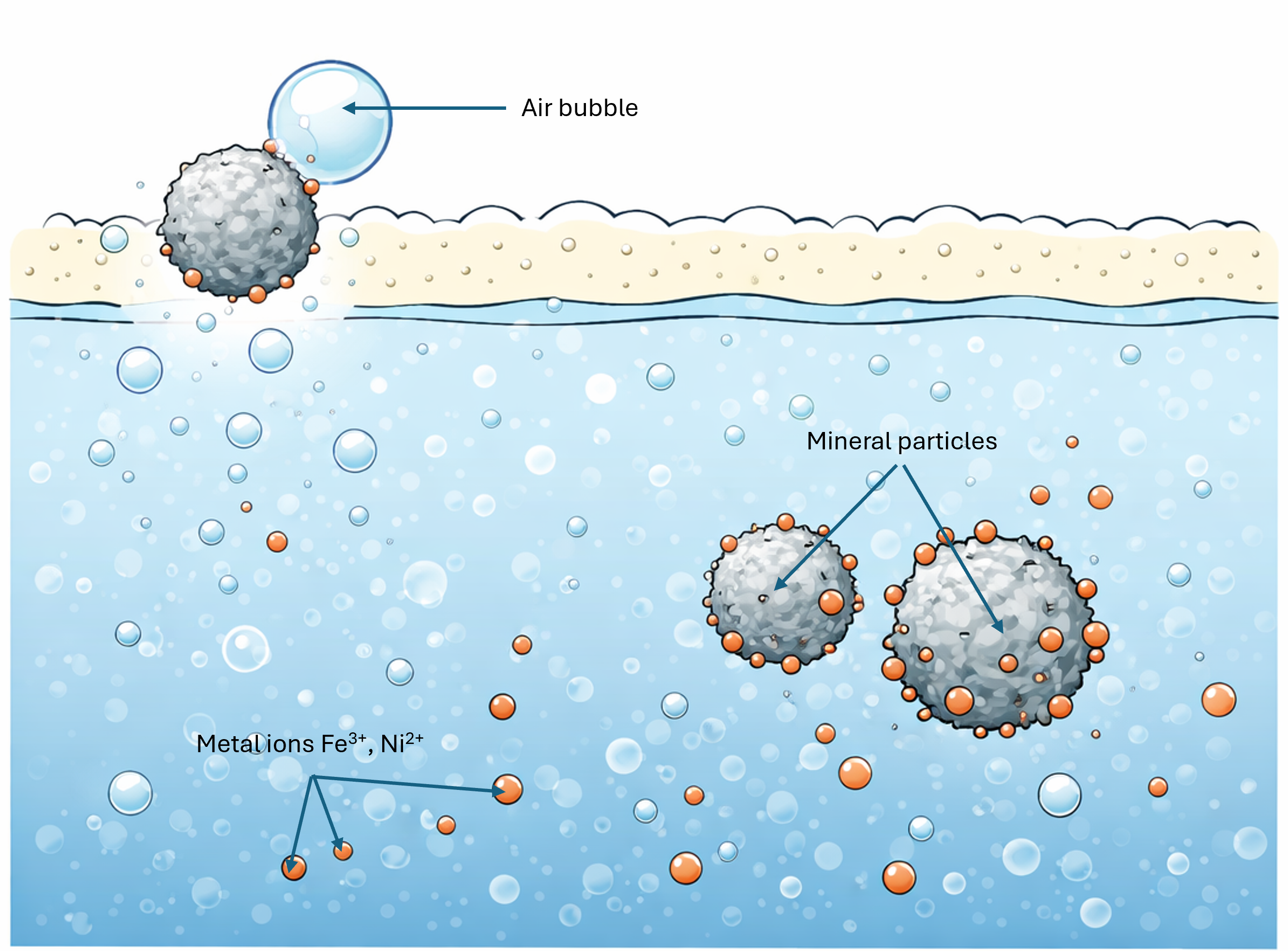
Fig: Dissolved metals in process water can interfere with flotation chemistry and affect recovery.
Why this matters
When the underlying cause of performance variation is not clearly visible, operators often respond by adjusting reagents or other process parameters without full understanding of the root cause.
This can reduce process stability and lead to unnecessary reagent consumption, while recovery losses remain only partially explained. Even relatively small variations can accumulate into a significant economic impact over time.
What could this mean in practice
In a typical flotation operation, even short periods of instability can have a measurable financial impact. Example of potential impact:
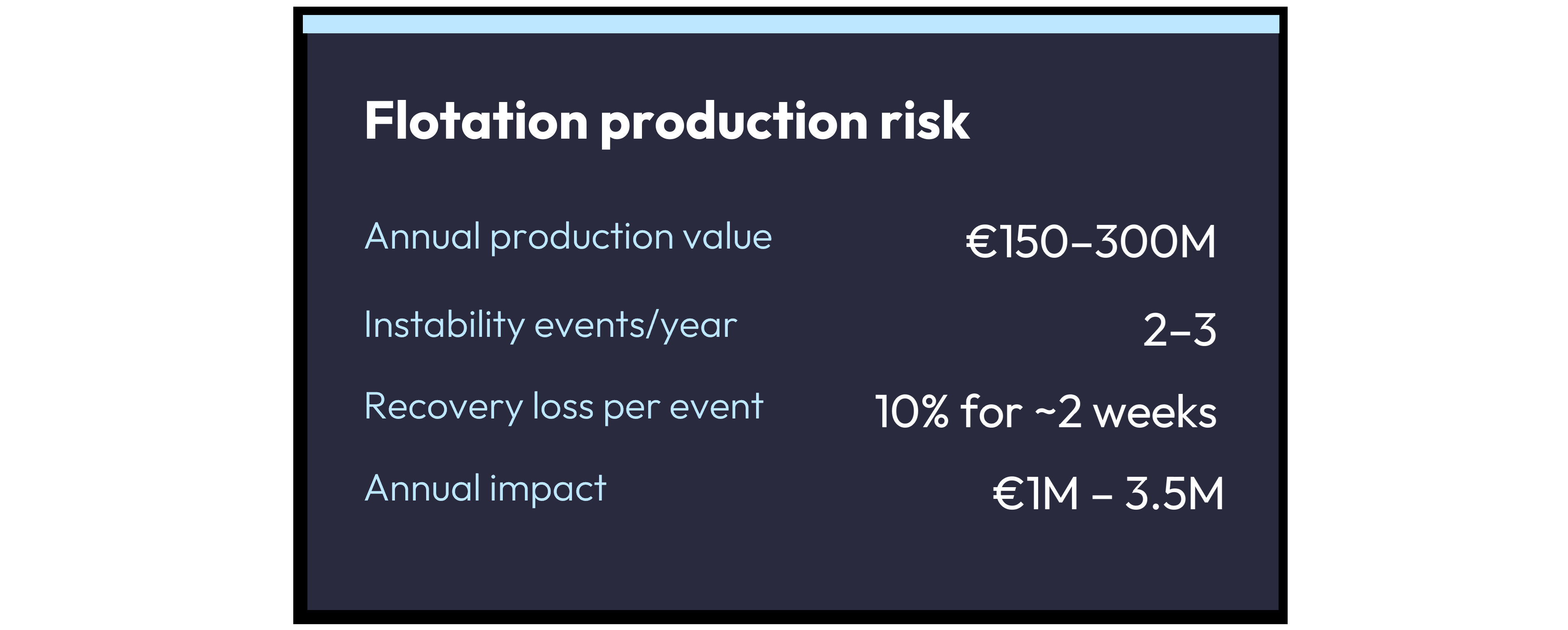 The scale of the impact is depending on how quickly the underlying cause is identified and addressed.
A different approach
Instead of relying only on delayed lab results, operations are starting to look at faster visibility into dissolved metals directly in process water.
With faster insight, it becomes possible to:
understand changes in water chemistry earlier
link water quality to flotation performance
make adjustments based on actual conditions
The key is not only what is measured — but when the information is available.
Where this is being explored
Rapid dissolved-metal analysis is already being evaluated in mining operations where water is extensively recycled and process stability is critical.
In these cases, the objective is to better understand the connection between water chemistry and flotation behaviour, especially in situations where small chemical changes can have a measurable effect on recovery.
Let’s discuss your case
Every flotation circuit is different.
If you have seen unexplained performance variations or are interested in understanding how water chemistry may be affecting your process, it would be interesting to exchange experiences.
You can contact us directly at: